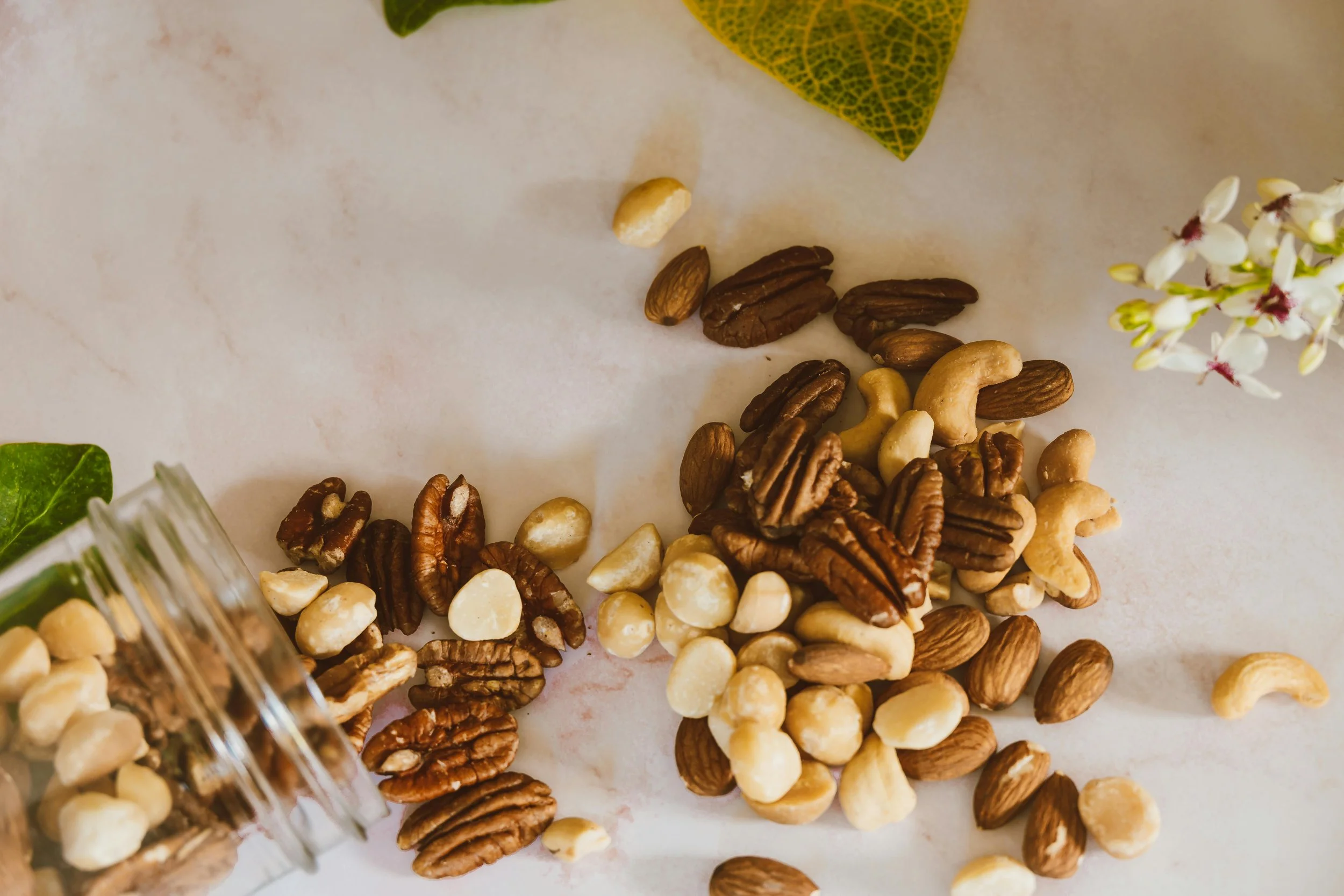
“A Tough Nut to Crack: Challenges in Outbreak Investigation of Low-Moisture Food”
Tuesday, June 2, 2026 at 1-3 pm on Zoom platform.
This event was free of charge. Thank you for attending!
Agenda:
1:00pm - 1:05pm - Moderator notes, speaker abstracts, PHO disclaimer, polling question on participant preference for virtual/in person
1:05pm - 1:35pm - Presentation #1 - Dr. Sandeep Tamber, Health Canada - Seeds, spices and spreads: Understanding Salmonella risks in low-moisture foods
1:35pm - 2:05pm - Presentation #2 - Katharine (Kate) Fagan-Garcia, PHAC - A tough nut to crack: A multi-strain Salmonella outbreak linked to pistachios and pistachio-containing products in Canada
2:05pm - 2:35pm - Presentation #3 - Alexander Todd, CFIA - CFIA’s response to the Iranian pistachio investigation and outbreak
2:35pm - 3:00pm - Overall Q&A
Presenters’ Biography:

Presenter 1:
Dr. Sandeep Tamber is a food microbiologist, working as a research scientist at Health Canada’s Food and Nutrition Directorate. Her research is dedicated to reducing foodborne illness through the study of Salmonella in foods. She is particularly interested in pathogen behavior, the development of improved detection methodology, and issues related to antimicrobial resistance.
Dr. Tamber has authored numerous peer-reviewed publications, serves on several editorial boards, and is a recognized expert consulted on matters related to Salmonella and salmonellosis.
Presentation Abstract:
Seeds, spices and spreads: Understanding Salmonella risks in low-moisture foods
In this seminar, Dr. Tamber will explore the unique challenges posed by Salmonella in low-moisture foods such as seeds and spices. Drawing on several Canadian outbreaks, she will illustrate how these events have shaped our understanding of Salmonella in foods with low water activity. Dr. Tamber will present her latest research on improving the detection of Salmonella, characterizing its behavior in low-moisture matrices, and identifying mitigation strategies that can be applied during food preparation. The seminar will highlight both scientific insights and practical approaches to reducing the risk of foodborne illness.
Learning objectives:
1. Describe the unique challenges posed by the presence of Salmonella in low moisture foods
2. Recognize where and how mitigation strategies can be applied along the low-moisture food chain

Presenter 2:
Alexander Todd is currently occupying the role of National Manager for the Food Safety Technical Assessment and Analysis group in the Office of Food Safety and Recall. He manages a group of four risk technical risk assessors who work on a variety of different food safety related issues. This group works on microbiological, chemical, extraneous, veterinary drug residues, nutrition, allergens related issues. Their work informs the risk management decisions conducted by the Office of Food Safety and Recall.
Prior to his work as the manager, he worked as one of these risk assessors starting with the agency back in 2010. Alexander has had the opportunity to work on many high profile investigations and NEOC’s; including the current ongoing pistachio outbreak, Mexican Cantaloupe outbreak, Gort’s Gouda NEOC and XL beef outbreak but to name a few. In 2015/2016, Alexander worked on a 1 year assignment with the Outbreak Management Division at PHAC as an epidemiologist. Prior to working with the CFIA, Alexander started his career with the Bureau of Microbial Hazards at Health Canada, back in 2001 as a lab technician.
Presentation Abstract:
CFIA’s response to the Iranian pistachio investigation and outbreak
Starting in the summer of 2025, the CFIA in conjunction with our federal and provincial partners investigated a multi-strain outbreak of Salmonellosis associated with pistachios originating from Iran. Since then, this outbreak has expanded, encompassing one of, if not the largest food safety outbreak investigation with the most strains, and the most recalls in the agency’s history. Risk management actions included targeted recalls, import controls, enhanced sampling, and stakeholder communications to protect public health. This presentation describes the multi‑jurisdictional food safety outbreak investigation linked to imported Iranian pistachios and highlights the investigative strategies, risk management actions, and resulting policy changes.
Learning objectives:
1. Understand how the CFIA conducted the food safety investigation in response to the Iranian pistachio outbreak
2. Learn how the CFIA implemented risk management strategies
3. Understand some of the challenges associated with low moisture food investigations
Presenter 3:
Katharine (Kate) Fagan-Garcia has been an epidemiologist on the Response Team with the Outbreak Management Division at the Public Health Agency of Canada since 2022. She is a graduate of the Canadian Field Epidemiology Program and holds an MSc in Epidemiology from the London School of Hygiene and Tropical Medicine and an MSc in Virology from the University of Alberta. Kate’s current work involves supporting the response to multi-jurisdictional enteric illness outbreaks, and she is particularly interested in those with a zoonotic source.
Presentation Abstract:
A tough nut to crack: A multi-strain Salmonella outbreak linked to pistachios and pistachio-containing products in Canada
In June 2025, a multi-jurisdictional outbreak investigation was initiated for a cluster of Salmonella Havana cases. Pistachios were a suspect source and sampling of pistachios and pistachio-containing products identified additional Salmonella strains and associated cases. As of April 16, 2026, 44 strains from 18 Salmonella serotypes were included in the investigation, with 189 cases reported from 6 provinces. Case illness onset dates range from March 2025 to March 2026. Ages range from 1 to 95 years (median: 36 years); 70% of cases are female. Twenty-six cases have been hospitalized and no deaths have been reported. Overall, 80% of cases reported exposure to pistachios or pistachio-containing products (e.g., Dubai-style chocolate, pastry products). Epidemiological and food safety investigations identified pistachios and pistachio-containing products from Iran as the source of the outbreak. Public health action has included public communications, over 500 recalls, and a ban of the import of pistachios from Iran.
Learning objectives:
1. Describe the epidemiology of a unique multi-strain Salmonella outbreak linked to a commodity previously not associated with outbreaks in Canada.
2. Describe challenges in investigating a large, complex, multi-jurisdictional Salmonella outbreak.
FFIGS Symposium 2025
Beyond the plate: Safety innovations stirring up change - 31st annual workshop
May 7, 2025
8:30am-3:15pm
8:30am - Registration/Coffee
9:00 am - Welcome and Opening Remarks
9:15 am - “Demystifying AI for Canadian subject matter experts in the food safety field” John Galbraith, The Data Integrators
10:00 am -“Building relationships from the beginning: how York Region Public Health connects with new and home food business operators” Sonia Figueiredo & Tom Reidt, York Region Public Health
10:30 am - Break and Networking
10:45 am -“Use of controlled drying and high-pressure processing to enhance the safety and shelf-life of ready-to-eat meat products” Dr. Sampathkumar Balamurugan, Agriculture and Agri-Food Canada
11:30 am - “Smart food packaging to detect contamination and prevent food waste” Dr. Tohid Didar, McMaster University
12:00 pm - “RepelWrap - From engineered surfaces to antimicrobial solutions” Dr. Leyla Soleymani, McMaster University
12:30 pm - Lunch and Networking
1:30 pm - “Over twenty years of international foodborne outbreak data: How PAIFOD continues to support activities to prevent foodborne illness in Canada” Austyn Baumeister, PHAC, National Microbiology Laboratory
2:00 pm - “Canadian front-of-package nutrition labelling” Linda Winget, NSF
2:30 pm - “Impact of ATP and microbiological indicator testing - in combination - on cleaning and sanitation effectiveness and food product quality” Arlene Larson, Neogen
3:00 pm - Closing remarks
3:15 pm - Adjournment
Tagged: food and safety, government, public health, non profit, environmental health, food safety, canadian, food industry, food quality, science, research, workshop, education
Elm Hurst Inn & Spa
415 Harris Street, P. O. Box 123
Ingersoll, Ontario, N5C 3K1
FFIGS Symposium 2026
A Tough Nut to Crack: Challenges in Outbreak Investigation of Low-Moisture Food
Wednesday, June 2, 2026
1 - 3 pm (Zoom)
Register for this free virtual event here!
1:00 pm - “RepelWrap - From engineered surfaces to antimicrobial solutions” Dr. Leyla Soleymani, McMaster University
12:30 pm - Lunch and Networking
1:30 pm - “Over twenty years of international foodborne outbreak data: How PAIFOD continues to support activities to prevent foodborne illness in Canada” Austyn Baumeister, PHAC, National Microbiology Laboratory
2:00 pm - “Canadian front-of-package nutrition labelling” Linda Winget, NSF
2:30 pm - “Impact of ATP and microbiological indicator testing - in combination - on cleaning and sanitation effectiveness and food product quality” Arlene Larson, Neogen
3:00 pm - Adjournment, Closing remarks